
We’re thrilled to share the good news that the Knowles-Nelson Stewardship Program awarded the Town of Westport a grant of $812,100 to support the purchase of a prized property on the northside of Lake Mendota.
Groundswell protected this special place, once slated for development, in December 2022. Since then, we continued to work with the Town of Westport and Gathering Waters to secure additional funding for this large purchase through the Knowles-Nelson Stewardship Program. Our request for funding was approved last week.
A mix of grassland, wetlands, and oak woods, the land is an important part of the Lake Mendota watershed. It is home to a wide variety of wildlife. It also provides essential outdoor recreation space for the community.
Protecting special places is always a team effort. We are grateful to Steve and Marianne Schlecht and the citizens of the Town of Westport for their support. A special thanks to Senator Dianne Hesselbein and Representative Alex Joers for championing this grant. Thank you to Governor Tony Evers for making the Knowles-Nelson Stewardship Program a priority.
And thank you to our Groundswell supporters for caring about conservation where you live.
We are happy to share the good news that last week Groundswell purchased 20 acres of wetlands in southern Columbia County. We are grateful to the Bredeson family for their interest in conservation.
The property lies within the Anderson Waterfowl Production Area (WPA). Anderson is one of thirteen WPAs in Columbia County. These areas spread across 13,000 acres of land and water in Columbia County. They are managed as part of the National Wildlife Refuge System for ducks, geese, and other waterfowl. They also provide important habitat for other wildlife.
This property is open for hunting, fishing, and trapping (subject to applicable Federal and State laws). It is also open to hiking, cross country skiing, and observation. Groundswell will donate the property to the Fish and Wildlife Service for long-term ownership and management.
Funding to purchase the property came from the Knowles-Nelson Stewardship Program, the North American Wetlands Conservation Act, and Groundswell supporters. Thanks to Ducks Unlimited for its role in securing the federal acquisition funds.
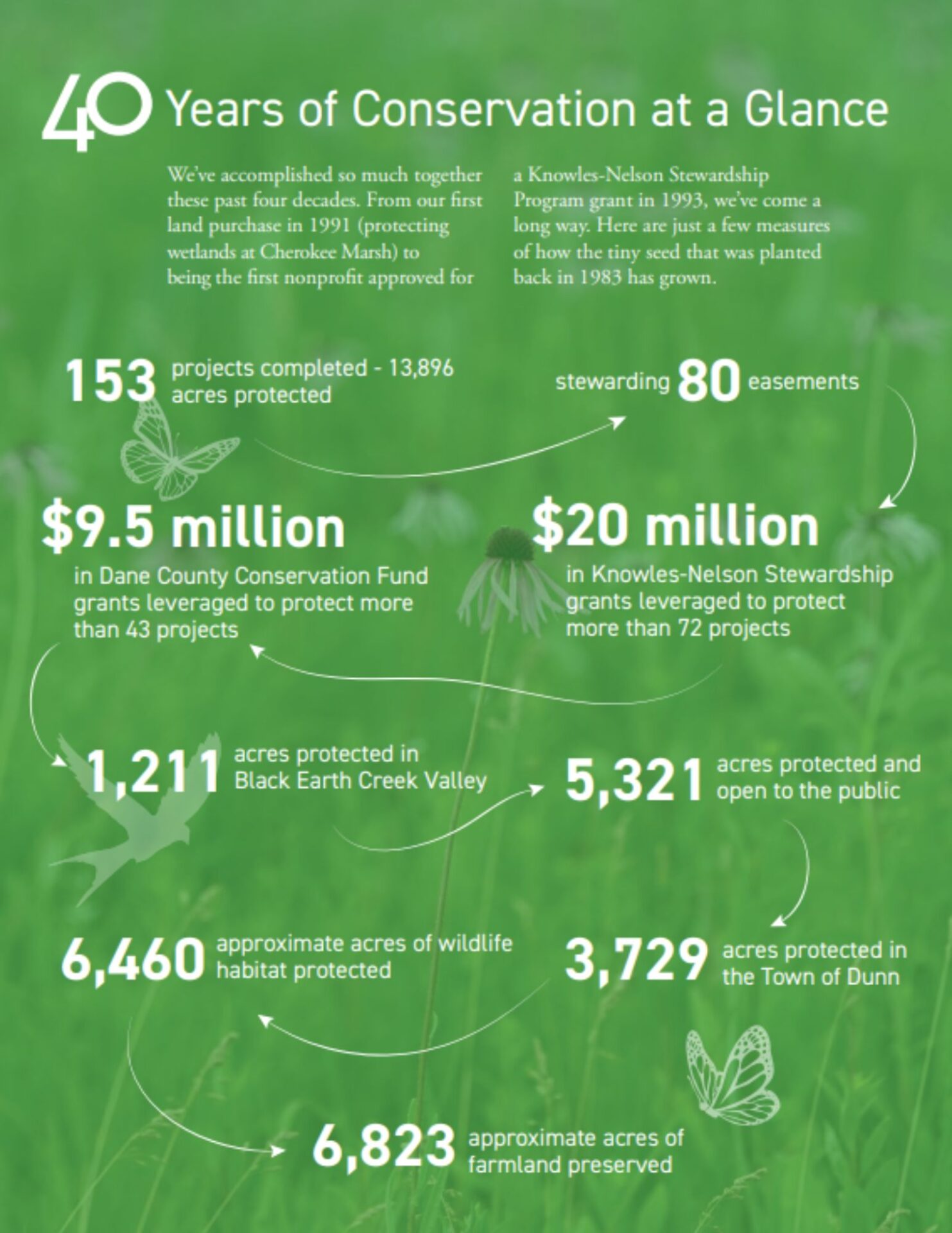
We’ve accomplished so much together these past four decades. From our first land purchase in 1991 (protecting wetlands at Cherokee Marsh) to being the first nonprofit approved for a Knowles-Nelson Stewardship Program grant in 1993, we’ve come a long way. Here are just a few measures of how the tiny seed that was planted back in 1983 has grown. Learn more by visiting our history page on our website.
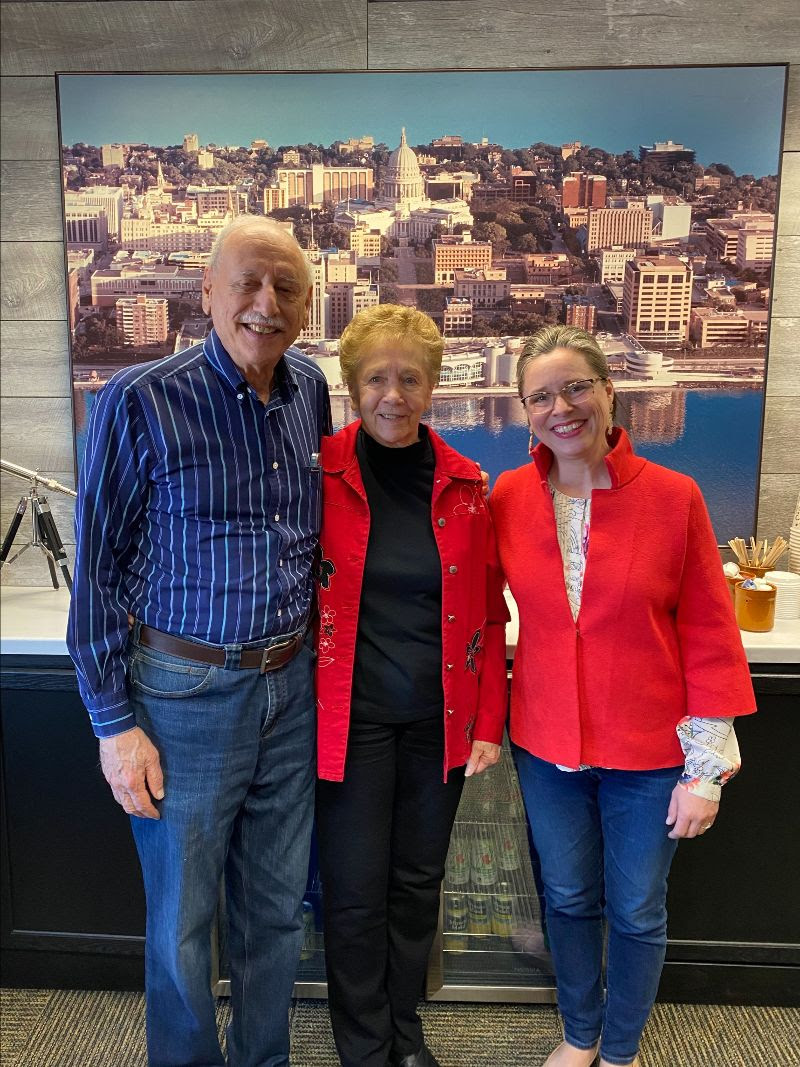
Landowners Ron & Darla Giordano pose with The Prairie Enthusiasts Executive Director Debra Behrens. Photo credit: The Prairie Enthusiasts
Protecting special places forever is always a team effort. We recently had the pleasure of teaming up with The Prairie Enthusiasts, along with two conservation-minded landowners, to help protect 40 acres of land in the Wisconsin River Valley.
When Wisconsinites think of their landscapes, they rarely envision sandy areas where cacti could thrive. So, it may be surprising to learn that within the Wisconsin River Valley, such an ecosystem has survived the changes of the last century and is now permanently protected by The Prairie Enthusiasts.
With the help of Groundswell, this 40-acre parcel, now named Giordano Oak Barrens and Sand Prairie, was donated to The Prairie Enthusiasts by Ron and Darla Giordano on May 16, 2023. Groundswell led negotiations with the owners, made arrangements for the closing, and helped cover costs associated with the closing. With the help in part from a generous donation provided by the Giordanos to support initial management of the site, The Prairie Enthusiasts can now ensure the continued vitality of this area.
“We are excited to be helping the Giordanos fulfill their dream of seeing this site be preserved and restored as a natural area for generations to experience and enjoy.”
– Rich Henderson, The Prairie Enthusiasts Board Member
The Giordanos took an interest in the area many years ago, and for ten years, they called the original owner twice a year, asking if he was interested in selling. When the day finally came, the original owner asked to meet the Giordanos to ensure they were people who would care for the land. Satisfied with the Giordanos’ intent, they were sold the property and quickly began making improvements.
They contacted the Wisconsin Department of Natural Resources to survey the land and understand its history; they planted trees and removed dead brush. Their stewardship was driven by the goal for the land to be a haven for the natural world, and for others to enjoy its splendor.
The property has a beautiful view overlooking Lake Wisconsin and the Merrimac Railroad Bridge. It also has various native ecosystems that are now rare but once were common.
We are grateful to the Giordanos, The Prairie Enthusiasts, and the many volunteers who helped protect this property for generations to come. Current and new volunteers will now work towards the goal of bringing this ecosystem back to its original state of sand prairie and oak barrens, which was its condition when the Ho Chunk Nation was caring for the land for thousands of years. Until management plans are
finalized, the preserve is not open to the public. Those interested in volunteering to restore this ecosystem should contact The Prairie Enthusiasts at info@theprairieenthusiasts.org
More people will be able to safely access the Lower Yahara River thanks to Groundswell’s purchase of 1.64 acres south of the Dunkirk Dam. This special place is adjacent to property owned by the Dunkirk Dam Lake District and to the Town’s Charlie H. Lyon Memorial Park.
Immediately after the acquisition, Groundswell transferred the parcel to the Town of Dunkirk. The Town plans to work with the Lake District to construct amenities on the property. Current plans include an ADA-accessible path, an accessible canoe & kayak put-in/take-out, and an accessible fishing pier.
There is currently no safe public access for boaters to portage the Dunkirk Dam due to turbulent water immediately below the dam. This acquisition is further south and will allow the public to use canoes and kayaks on this segment of the Yahara Chain Water Trail. An existing parking lot at the Charlie H. Lyon Memorial Park would connect with the riverside improvements by the planned footpath.
The property had been in the Hansen family since 1945, when Otto Hansen purchased it. His son, Rollin, fished from the property and cleared about an acre of the land for a vegetable garden. The current landowners are third and fourth generations. Although they were approached by a developer, the family chose to preserve the property. “We want the public to be able to enjoy this land next to the Yahara River for years to come,” said Otto’s granddaughter Judy Adler. “Public access will enhance the Town’s park lands.”
River usage in this area is expected to increase with the City of Stoughton’s new River Park for kayaks and canoes. The River Park will be upstream from the Hansen acquisition, and some boaters will no doubt continue downstream to the Dunkirk dam. “This purchase makes possible safer and accessible access to the Yahara River, while protecting the fragile shoreline,” said Laura Davis, Chair of the Dunkirk Dam Lake District. “Right now people who want to fish must access the water on brushy, steep, and sometimes muddy trails. Our plans are to construct a safe, accessible trail that leads to an accessible fishing pier and an accessible boat launch.”
Norm Monsen, Chair of the Town of Dunkirk, termed the acquisition “…a landmark day for our Township. We look forward to working with Groundswell Conservancy on other land preservation projects through our new Rural Preservation Program.”
This acquisition was possible because of the generosity of the landowners, our partnership with the Town and the Lake District, and funding provided by the Knowles-Nelson Stewardship Program and the Dane County Conservation Fund.
We’re excited to share the good news that Groundswell recently helped the Town of Westport purchase 105 acres once proposed for a large bakery.
The property at the corner of County M and Woodland Drive was owned by the principals of Bagels Forever and zoned for a bagel factory for many years but was recently put on the market. A mix of grassland, wetlands and oak woods, the land is bordered by the Westport Town Hall on one side and the DNR’s Six Mile Creek Fishery Area on the other.
“For the 30 years I’ve been associated with the town, I’ve often looked out the window of the Board Room and thought how wonderful if we could protect that land,” said Dean Grosskopf, Westport Administrator/Clerk-Treasurer and former town chair. “Now, to see everything fall in place in just nine months, has been nothing short of a miracle.”
With the open space addition, there’s now an almost unbroken corridor of protected public land around the north side of Lake Mendota, stretching from Governor Nelson State Park to Wisconsin 113.
Groundswell supported the purchase by helping to negotiate a large cash donation for the property from Steve and Marianne Schlecht. We are so grateful to the Schlechts for making this important land purchase possible!
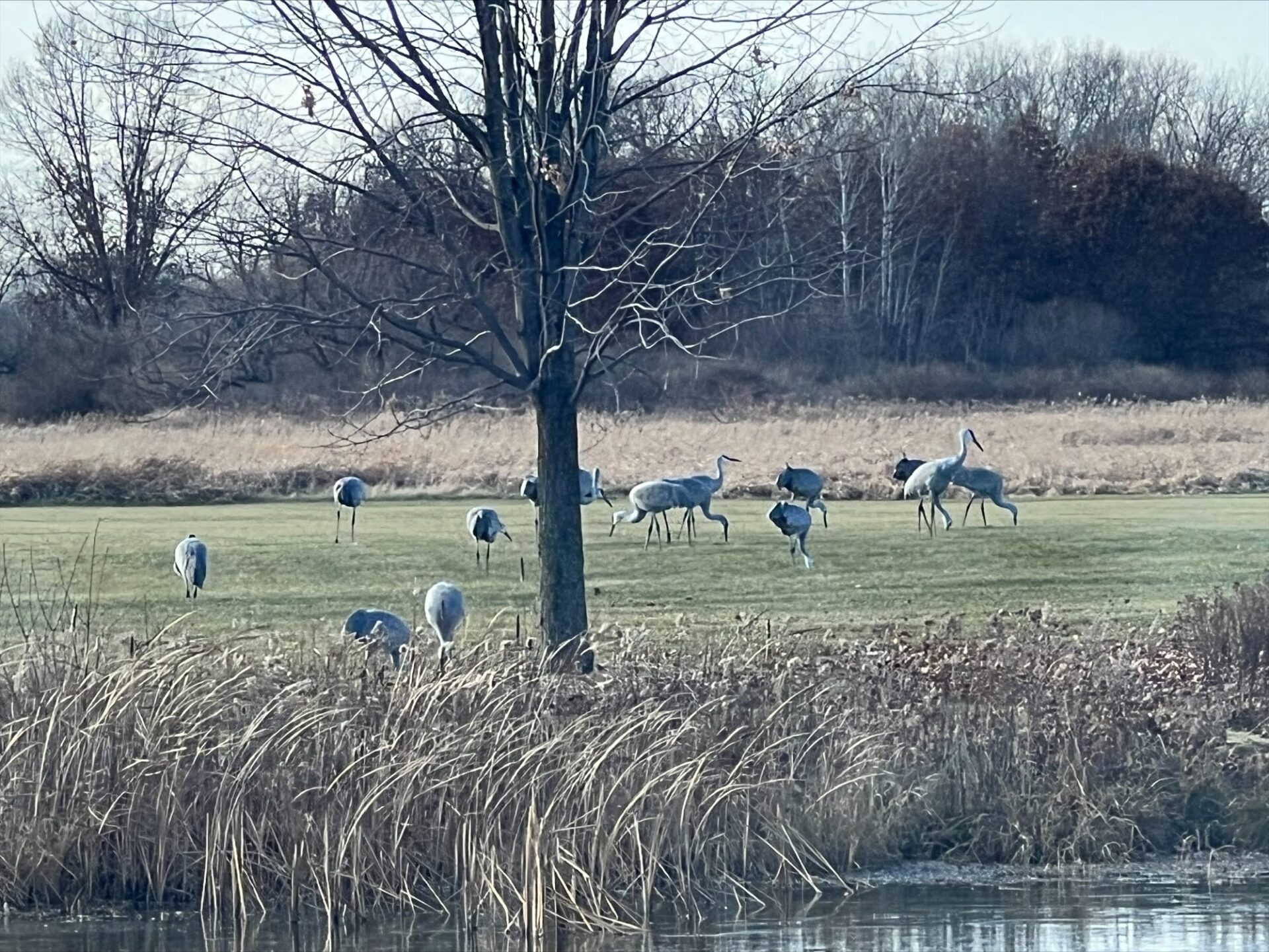
Photo credit: Town of Westport
To ensure the property is never developed, the Town of Westport granted a conservation easement to Groundswell Conservancy. The easement will maintain the conservation values and access for public recreation and enjoyment.
“The days of acquiring such a large property so close to Lake Mendota are quickly passing,” said Mike Foy, our Land Protection Specialist. “This acquisition by Westport — with support from Groundswell Conservancy and our generous supporters — will benefit wildlife, wetlands, water quality, and public recreation for generations to come.”
The land will be added to the Westport park system and provide additional space for organized recreation next to the existing soccer fields. The town will also maintain a large conservation area to provide wildlife and pollinator habitat, protect wetlands and reduce storm water runoff to improve Lake Mendota water quality.
Moving forward, Groundswell will assist the town in financing the purchase via available local, county, state, and federal funding sources. Depending upon grants received, the town will need to raise between $1 million and $2 million in private funds.
You can support the purchase of this important parkland addition by making a tax-deductible gift to the Town of Westport. Checks should be made out to the Town of Westport, attention Dean Grosskopf, Treasurer, noting it is a Parkland donation. Donors will receive a donation acknowledgement for their gift.
Thank you again to Steve and Marianne Schlecht, the Town of Westport, and our Groundswell supporters for making this important conservation project possible. We could not have done it without you!
Good news! Today we protected 180 acres of prairie and oak savanna habitat in the Town of New Glarus. This was made possible by the generous donation of a private conservation easement by landowners Kris and Penny Kubly.
The Four Oaks Farm Conservation Easement protects remnant prairie and oak savanna habitat, extensive restored prairie, and approximately 2,350 feet of streambank on Legler School Branch. Quality sedge meadows, emergent marsh, and oak woodlands are also now protected forever. Together, these habitats host numerous rare, threatened, and endangered plant and animal species.
The Kublys have been active and attentive in caring for this land for many years. That’s why they took the extra step to ensure their hard work restoring and managing this landscape lasts forever. Kris and Penny established a land management endowment which will help fund land management and restoration of the property in perpetuity. Groundswell will work with the landowners (and all future landowners) to ensure the property continues to be managed with the care and attention that the Kublys have shown.
We thank Kris and Penny Kubly for their dedication to protecting this land. We also thank Groundswell supporters like you.
On Friday, August 5, 2022, the Town of Dunn and Groundswell Conservancy placed a permanent conservation easement on the Peterson Family centennial farm (see map link). This easement preserves valuable farmland by restricting development on the 133-acre property. A 300-foot wide vegetative buffer between the cropland and Hook Lake will protect water quality and provide wildlife habitat. The Lake encompasses Hook Lake Bog State Natural Area, a rare community in southern Wisconsin.
We thank landowners Lea Ann and Randall Heacox for their dedication to protecting this land. We also thank the Town of Dunn for their leadership on this project, and for their continued commitment to conservation through their Purchase of Development Rights (PDR) program. Since 1997, Groundswell and the Town of Dunn have worked together to help protect nearly 4,000 acres of rich farmland.
Lea Ann’s great-grandparents, Rasmus and Minnie Peterson, bought the property in 1910. They passed it down through her grandfather Elmer Peterson to her mother Norraine Peterson Kvammen. According to Lea Ann, “The Town of Dunn’s PDR program was instrumental to keeping this farm in our family. We are very grateful.” Click here to see more photos of the farm taken by Mario Quintana, including a present day recreation of a circa 1950 aerial photo.
With this easement, this land will remain farmland forever, helping to protect productive topsoil—a precious limited resource—and to maintain farm-friendly communities in Dane County.
This project was made possible by the generosity of Lea Ann and Randall Heacox, the Dane County Conservation Fund, the USDA Natural Resource Conservation Service’s Agricultural Conservation Easement Program, Town of Dunn residents, and supporters of Groundswell like you.
On Wednesday, August 10, 2022 we purchased 40 acres of wetland habitat within the Lower Mud Lake Natural Resource Area in the Town of Dunn (see map link). Together with our recent acquisition and the Brost’s wetlands in 2020, we have now protected 143 acres within the Lower Mud Lake wetlands complex, historically an area of great importance to indigenous cultures in southern Dane County.
August is National Water Quality Month. Our cherished way of life depends on clean water: healthy ecosystems provide wildlife habitat and places to fish, paddle, and swim. This wetland habitat has been, and will continue to be, an invaluable resource which filters pollutants and improves water quality.
This acquisition came together thanks to the generosity of the landowner, supporters of Groundswell including Sean McBride, our Norm Anderson Conservation Opportunities Fund, the Knowles-Nelson Stewardship Habitat Areas Grant Program, and North American Wetlands Conservation Act funding administered through the U.S. Fish and Wildlife Service and Ducks Unlimited.
We thank the landowners, who wish to remain anonymous, for their part in permanently protecting this land. I leave you with a bit of wisdom to contemplate, courtesy of the landowners.
Our family has a long-standing connection with this land and is committed to preserving and protecting it. Knowing now the benefits wetlands provide to our ecosystem and the intrinsic value of the indigenous culture, it’s crucial that we protect this priceless heritage.
On Tuesday, July 19, 2022 we purchased 34 acres of wetland habitat within the Lower Mud Lake Natural Resource Area in the Town of Dunn (see map link). Together with our acquisition of the Brost’s wetlands in 2020, we have protected 103 acres within the Lower Mud Lake wetlands complex.
Wetlands act like filtering sponges in our ecosystem. They temporarily hold back and then slowly release surges in rainfall to help manage flooding. We are glad to protect these critical wetlands just south of Madison.
We thank the landowners, Craig and Renae, for wanting to see this land protected. When their neighbors, Ken and Eileen Brost, sold their wetlands to Groundswell, it got them thinking. Like the Brosts, they understood the importance of conserving and caring for wetlands. They also realized they don’t have the ability to care for the wetlands. Groundswell will manage the property consistent with the adjacent state land to provide permanent habitat for ducks and other wildlife.
Funding to purchase the land came from Wisconsin DNR’s Knowles-Nelson Stewardship Program and a U.S. Fish and Wildlife North American Wetlands Conservation Act grant administered by Ducks Unlimited. Of course, we couldn’t protect land without your support of Groundswell.